Non-Combustible
CSIRO tested AS1530.1
20-Year Warranty
Substrate & coating
Aluminium alloy 6060-T6 / 6060-T5 / 6005A-T6
Multiple profiles
100% Recyclable
Solid aluminium
165CW is an Australian-designed unitised aluminium curtain wall system. 165mm frame depth, 24-40mm IGU capacity, thermally broken, hook-on installation. Supplied by Valmond & Gibson.
Frame Depth
165mm internal
Mullion Width
86mm (including 10mm nominal gap)
Primary Framing Alloy
6060-T6
Secondary Framing Alloy
6060-T5
Structural Member Alloy
6005A-T6
IGU Glazing Capacity
24mm to 40mm
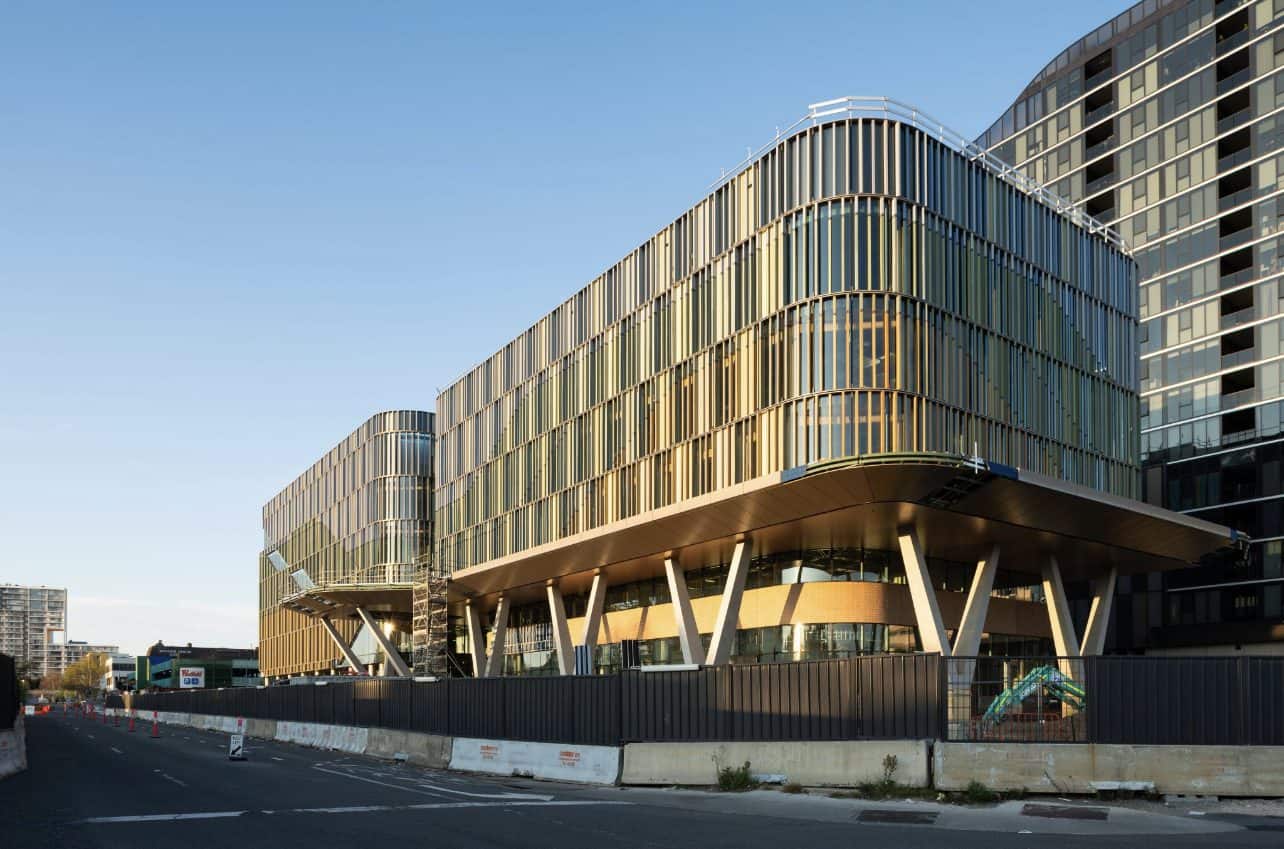
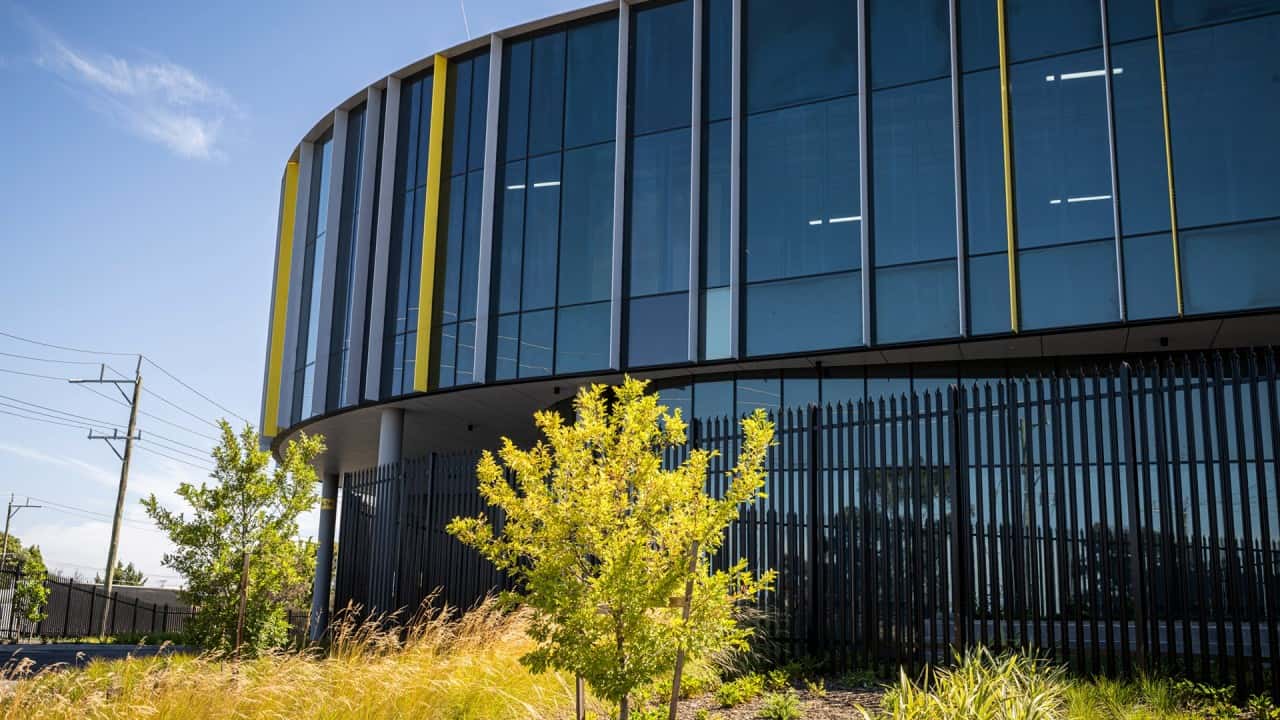
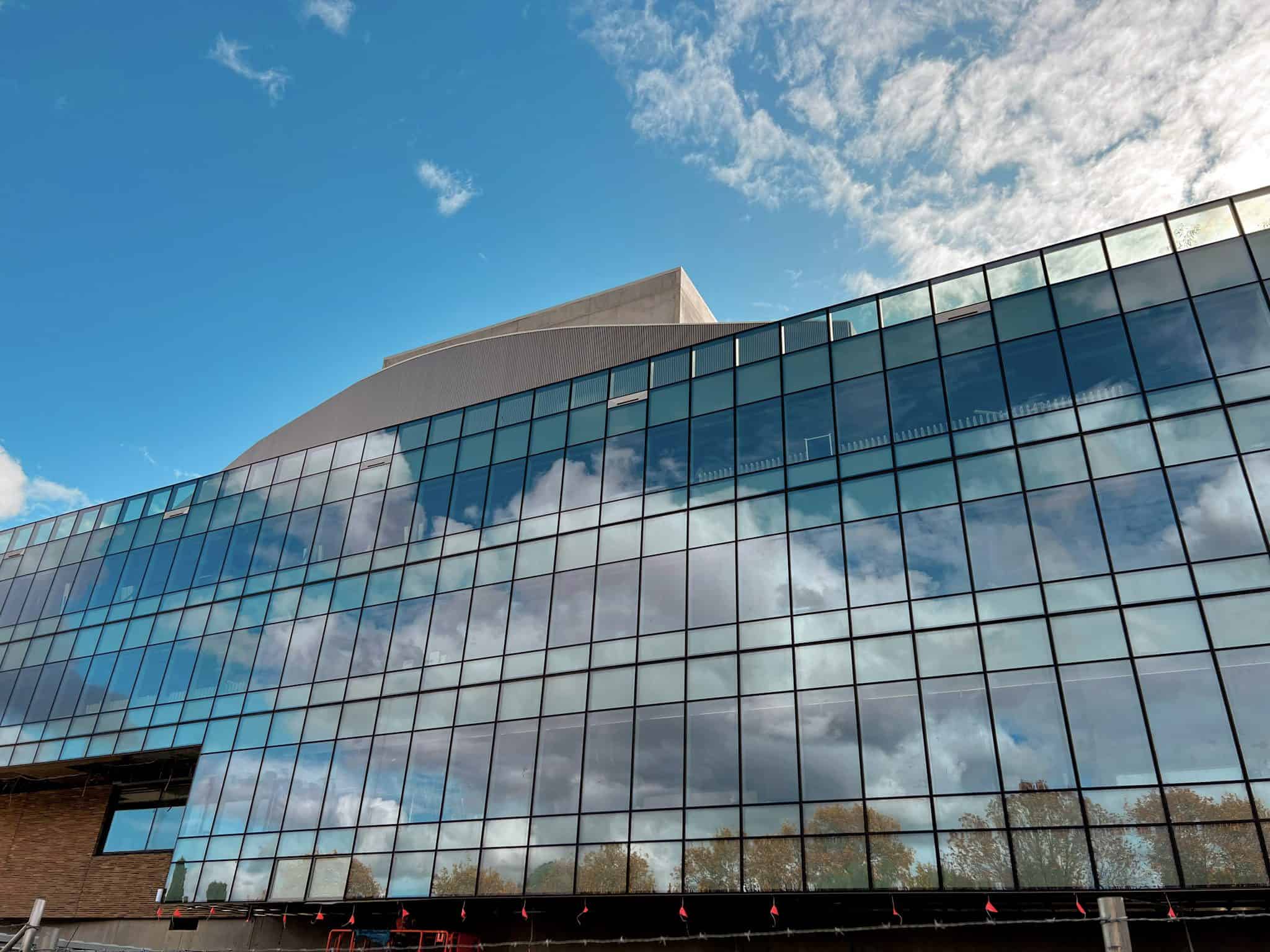
165CW is a unitised aluminium curtain wall system designed, engineered, and extruded in Australia. With a 165mm internal frame depth and capacity for insulated glass units from 24mm to 40mm, it is built for commercial, government, and institutional projects where performance, thermal efficiency, and architectural quality are non-negotiable. 165CW is supplied by Valmond & Gibson.
Why Australian Design and Extrusion Matters
165CW is one of the few curtain wall systems on the Australian market where the primary aluminium profiles are designed and extruded locally. This is not a point of nationalism — it is a practical supply chain advantage that has real consequences for project delivery.
When the extrusion source is domestic, lead times are measured in weeks rather than months. A standard order does not depend on international shipping schedules, port congestion, or customs clearance. For projects where the facade is on the critical path — which is most commercial projects — this difference can be the margin between hitting a programme milestone and missing it.
Local extrusion also means local engineering support. If a project requires a modified profile — a deeper mullion for a specific structural span, a different glazing pocket geometry, or a non-standard transom configuration — V&G can work directly with the extrusion facility to develop and produce modified sections. With an imported system, profile modifications typically require engagement with an overseas manufacturer, tooling approval cycles, and international freight for samples and production runs. That process can add months.
Currency exposure is the third consideration. Because the primary framing components are priced and produced in Australian dollars, the cost base for the core system is stable regardless of what happens to the AUD/USD or AUD/EUR exchange rate. Glass, sealants, and hardware still carry some import exposure, but the largest single cost component — the aluminium framing — does not.
For specifiers and project managers, these are not marginal advantages. They are risk reduction factors that affect programme certainty, cost predictability, and the ability to respond to design changes during construction.
Unitised vs Stick-Built
The distinction between unitised and stick-built curtain wall is fundamental to how the system is fabricated, transported, and installed.
In a stick-built system, individual mullions, transoms, pressure plates, gaskets, and glass panes are delivered to site as separate components and assembled in place — typically from scaffolding or swing stages at height. Every joint, every seal, every glass unit is handled and fitted on the building. This approach works, and has been used successfully on thousands of buildings, but it concentrates quality-critical work in the most difficult environment: an active construction site, exposed to weather, with multiple trades competing for access.
165CW takes a different approach. Each curtain wall module is assembled in a controlled factory environment before it reaches the site. The framing is cut, machined, and joined. The glazing is installed and sealed. The weatherproofing gaskets and pressure plates are fitted. The module is inspected. It arrives on site as a finished unit, ready to be lifted by crane and hooked onto the pre-installed bracket system on the building structure.
The practical advantages of this approach are well understood in the facade industry:
- Quality control — Factory conditions allow consistent sealant application, tighter assembly tolerances, and inspection before the module leaves the shop. Defects are caught and corrected in a controlled environment, not discovered at height on a live building.
- Installation speed — A unitised module is typically installed in a single crane cycle: lift, position, hook on. A competent installation crew can close a floor of facade in days rather than weeks. This speed matters on multi-storey buildings where the facade is the weather barrier and internal fit-out cannot begin until the floor is enclosed.
- Weather independence — Because modules arrive fully glazed and sealed, the building envelope can be closed in any weather condition where crane operation is safe. Stick-built glazing, by contrast, is often weather-dependent — wind, rain, and temperature all affect the ability to handle and seal glass at height.
For builders and project managers, the unitised approach reduces the facade’s impact on the construction programme. For building owners, it delivers a more consistent product with fewer site-dependent variables affecting long-term performance.
Thermal Performance
Thermal performance in a curtain wall system is determined by three things: the glass, the frame, and the connection between them. 165CW addresses all three.
The system uses thermally broken glazing adaptors with a polyamide strip and aluminium nose cap. The polyamide strip is the thermal break itself — a low-conductivity barrier between the interior and exterior aluminium framing that significantly reduces heat transfer through the frame. Without this break, aluminium’s high thermal conductivity would create a direct path for heat flow, undermining the performance of even the best insulated glass unit.
The aluminium nose cap protects the polyamide strip from UV degradation and mechanical damage during installation and service. It is a detail that matters over the building’s life — an exposed thermal break can degrade over decades, but a protected one maintains its performance.
The 24mm to 40mm IGU glazing capacity means the system can accept the full range of high-performance glass units that facade engineers and energy consultants typically specify. This includes standard double-glazed units at the lower end, through to units with wider cavities, multiple low-e coatings, argon or krypton gas fills, and laminated inner panes for acoustic or safety performance. The 40mm maximum accommodates the heavier, thicker IGU configurations that NCC Section J energy efficiency provisions increasingly demand on commercial buildings.
Together, the thermal break and the glazing capacity give facade engineers the tools to meet energy performance targets without compromising the structural integrity of the framing or the architectural intent of the facade design.
Engineering Features
165CW is engineered around a set of features that address the practical realities of curtain wall installation on multi-storey buildings.
3-part structural bracket with 3D adjustment. The bracket system is the connection between the curtain wall module and the building structure. The 3-part design allows adjustment in three axes during installation — in/out, left/right, and up/down. This is critical because building structures are never perfectly plumb, level, or aligned. Concrete floor slabs, steel beams, and edge conditions all vary from their theoretical positions. The 3D adjustment in the bracket absorbs these variations, allowing the curtain wall to be precisely aligned to the design intent regardless of what the structure behind it actually looks like.
Hook-on installation. Each unitised module hooks onto the brackets from above, engaging with the module below through interlocking mullion and transom joints. The hook-on approach means modules can be installed sequentially working up the building, with each module self-locating relative to its neighbours. This reduces the setting-out complexity on site and allows the installation crew to work efficiently with a single crane.
4-side structural silicone glazing. The glass in each module is retained by structural silicone on all four edges, providing a clean flush appearance on the exterior with no visible pressure plates or caps. Structural silicone glazing distributes wind loads evenly across the glass perimeter, improving the structural efficiency of the glazing and allowing larger glass sizes within the same frame dimensions.
Integrated sunshade brackets. Horizontal and vertical sunshade mounting is built into the framing design with concealed nutplate connections. This eliminates the need for secondary fixing systems or additional penetrations through the curtain wall to support external shading devices. The sunshade brackets are positioned during factory assembly, maintaining the weather integrity of the module.
Integrated skirting and blind pelmet. Factory-fitted options for architectural skirting at the floor line and blind pelmets at the head eliminate the need for on-site carpentry or secondary framing at the interface between the curtain wall and the internal fit-out. These details are often the source of quality issues on curtain wall projects when left to the internal trades — factory integration produces a cleaner, more consistent result.
Project Portfolio
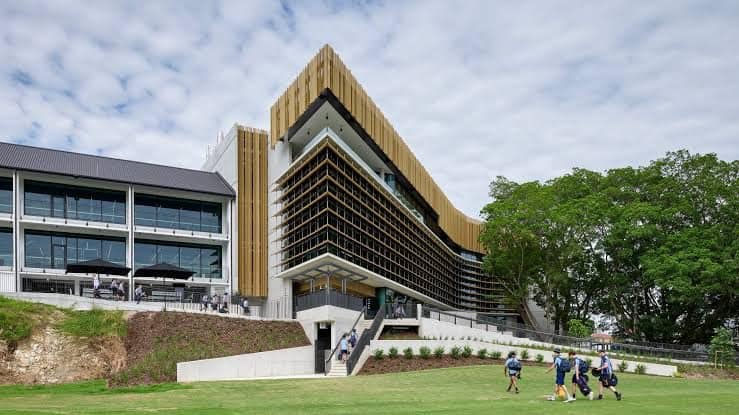
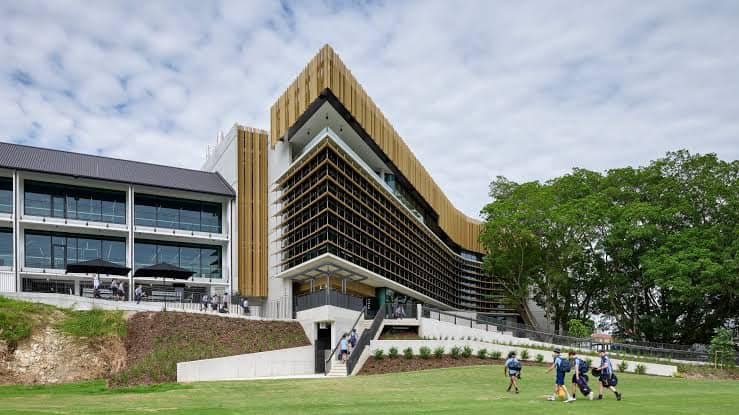
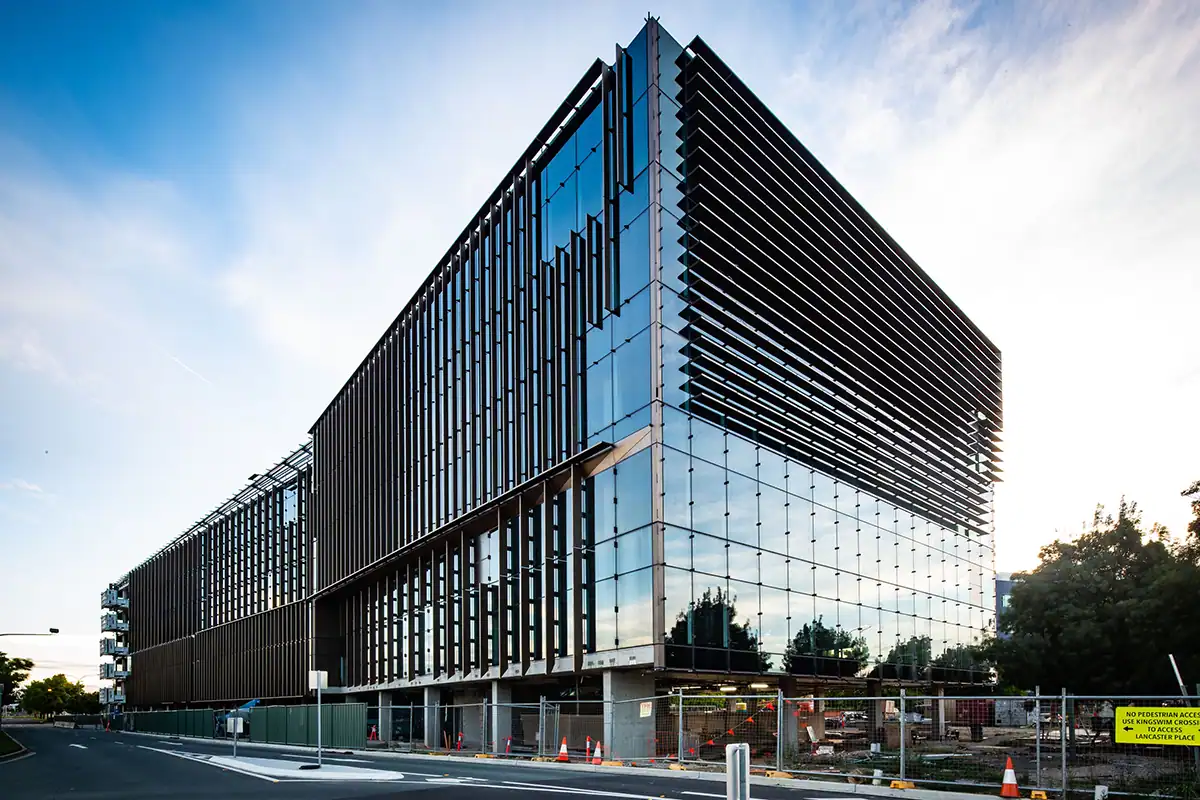
165CW has been supplied to major projects across Australia, spanning healthcare, education, defence, government, and commercial sectors:
- 6 Brindabella Circuit, Canberra ACT
- 25 Catalina Drive, Canberra ACT
- Deakin One, Canberra ACT
- Murdoch University, Perth WA
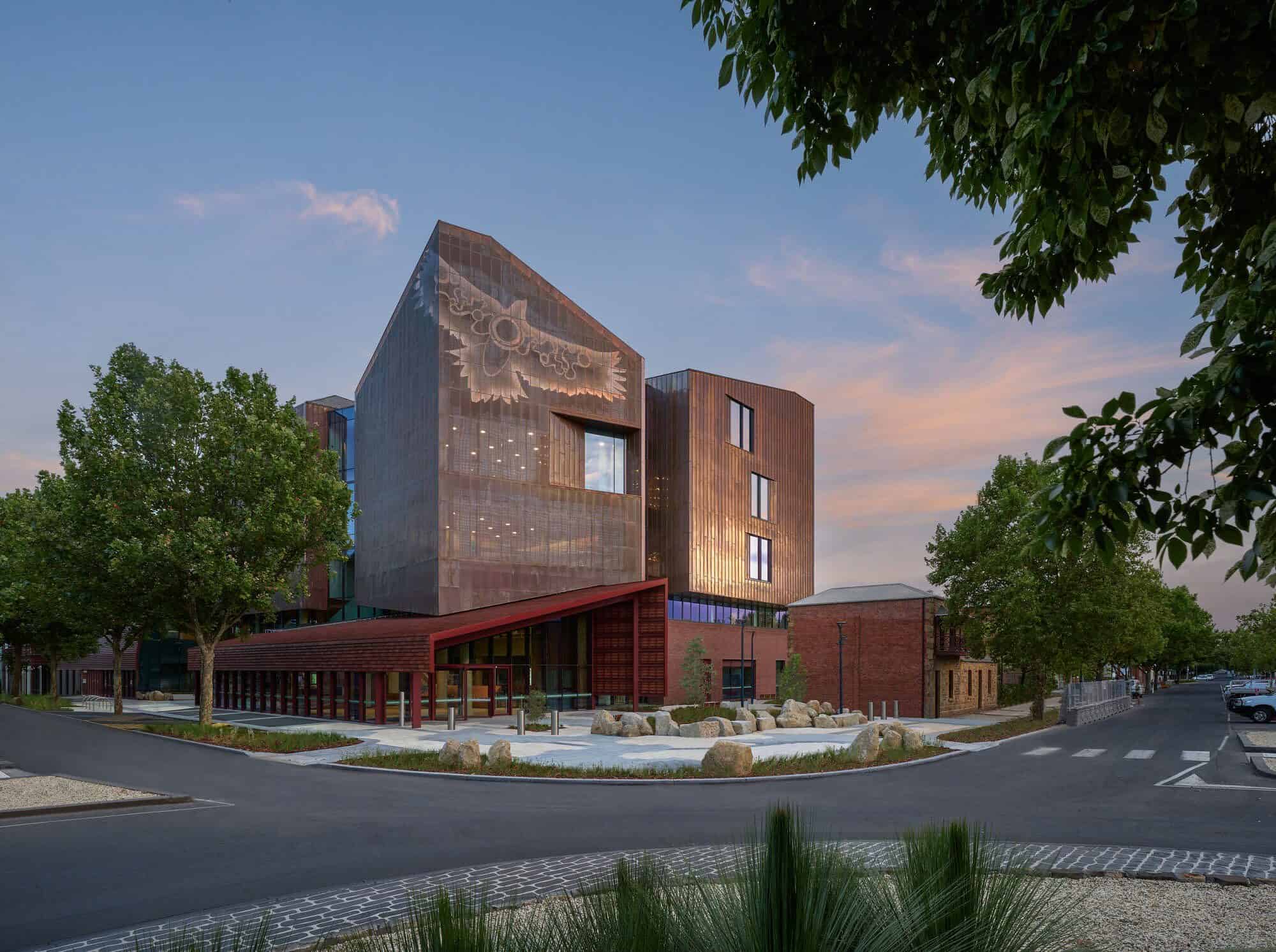
- Queanbeyan Civic & Cultural Precinct, NSW
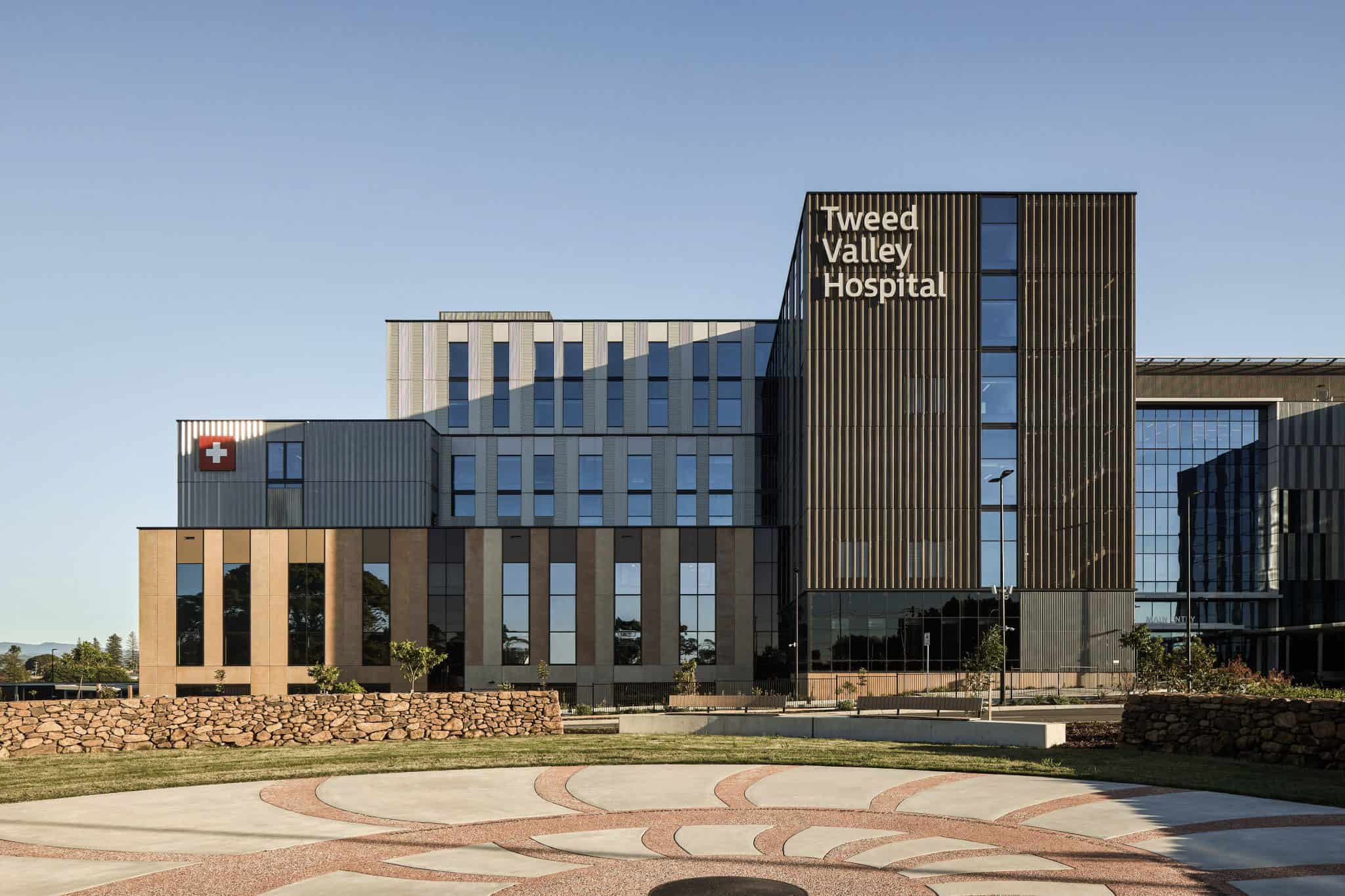
- Tweed Valley Hospital, Kingscliff NSW
- Sandstone Precinct, Sydney NSW
- Land 400 School of Armour, Puckapunyal VIC
These projects represent a range of building types and complexity levels — from civic and cultural facilities to defence infrastructure and tertiary healthcare. The diversity of the portfolio reflects the system’s adaptability to different facade geometries, performance requirements, and procurement approaches.
Software Integration
Valmond & Gibson has developed a custom LogiKal database (by Orgadata) specifically for the 165CW system. LogiKal is the industry-standard software platform for aluminium window and curtain wall fabrication, used by fabricators across Australia and internationally.
The V&G LogiKal database enables:
- Accurate estimating — Generate material take-offs and costings directly from architectural drawings, reducing the manual estimation effort and the scope for quantity errors.
- Cutting optimisation — Minimise aluminium waste by optimising how extrusions are cut from standard lengths. On a multi-storey project with hundreds of modules, this optimisation has a meaningful impact on material cost.
- AutoCAD export — Produce shop drawings directly from the LogiKal model for review, approval, and fabrication. This eliminates the redrawing step between estimation and production.
- CNC machine control — Export cutting and machining data directly to CNC equipment for precision fabrication. This closes the loop between design and production, reducing the opportunity for transcription errors.
For fabricators already using LogiKal in their workflow, the 165CW database integrates directly. For those using other systems, V&G can provide technical support during the transition.
Applications
165CW is designed for multi-storey buildings where the facade must deliver thermal performance, weather resistance, acoustic control, and architectural quality simultaneously. Typical applications include:
- Commercial offices — multi-level office buildings where floor-to-ceiling glazing and clean sightlines are the architectural intent
- Healthcare — hospitals, clinics, and aged care facilities where thermal comfort, acoustic performance, and infection control considerations influence the facade specification
- Education — universities, schools, and TAFE campuses where durability, low maintenance, and thermal performance are priorities
- Government and civic — court buildings, civic centres, libraries, and public administration buildings where design quality and long-term performance are expected
- Defence — specialised facilities with specific performance and security requirements
- High-rise residential — apartment and build-to-rent towers where unitised installation speed helps compress the construction programme
Conforming Standards
165CW is designed in compliance with:
- AS/NZS 1170.0:2002 — Structural design actions (general principles)
- AS/NZS 1866:1997 — Aluminium and aluminium alloys (extrusion tolerances)
- AS/NZS 4284:2008 — Testing of building facades
- AS 3715:2002 — Metal finishing (thermoset powder coatings)
- AS 1231:2000 — Aluminium anodic oxidation coatings
Finishes
165CW framing is available in anodised or powder coat finishes. Anodised finishes deliver a metallic appearance with a hard, transparent oxide layer over the natural aluminium grain. Powder coat offers a broader colour range including matte, satin, and gloss options. The finish choice is typically driven by the architectural intent and the environmental exposure of the building.
Maintenance
Clean curtain wall framing and external surfaces every three months using mild detergent and warm water. In coastal or industrial environments, increase the cleaning frequency to prevent salt or contaminant build-up. Isopropyl alcohol or methylated spirits are safe for spot cleaning. Do not use solvents or turpentine on powder-coated surfaces.
Glass cleaning and inspection of weather seals should follow the building’s standard facade maintenance programme. Refer to the 165CW Technical Manual for detailed maintenance guidance.
Last updated: April 2026
Specify 165CW
Download, adapt, submit. Everything your project specification and certifier need.
NCC Compliance Pathway
Project-specific engineering certification. Aluminium framing is inherently non-combustible. Designed, engineered, and extruded in Australia. Performance certified to project-specific structural, thermal, and acoustic requirements.
What your certifier needs
- Structural engineering certification (project-specific)
- Shop drawings stamped by facade engineer
Need help with the approval process? Our team can walk your certifier through the compliance evidence.
Contact our technical teamFAQ
Common questions from architects, specifiers, and installers.
What is a unitised curtain wall system?
A unitised curtain wall is a facade system where individual modules are factory-assembled -- framing, glazing, seals, and hardware -- before being transported to site and hooked onto the building structure. Each module is a self-contained unit that connects to its neighbours through interlocking mullion and transom joints. This contrasts with stick-built curtain wall, where components are assembled piece by piece on site. The unitised approach shifts the majority of labour and quality control from the construction site to a controlled factory environment.
Is 165CW designed in Australia?
Yes. 165CW is designed, engineered, and extruded in Australia. All primary aluminium profiles are locally produced. This is a practical supply chain advantage -- it means shorter lead times, the ability to modify profiles for project-specific requirements, local engineering support during design development, no international shipping delays, and reduced exposure to currency fluctuation on the core framing components.
What glazing capacity does 165CW support?
165CW accepts insulated glass units from 24mm to 40mm thick. This range covers standard double-glazed IGUs through to high-performance units with wider cavities, low-e coatings, or laminated inner panes. The glazing capacity supports the thermal and acoustic performance levels required on commercial, healthcare, and institutional projects under current NCC Section J energy efficiency provisions.
What movement tolerances does 165CW allow?
The system accommodates plus or minus 25mm at the stack head (vertical, handling floor-to-floor deflection) and plus or minus 10mm at the mullion (horizontal, handling thermal expansion and structural sway). These tolerances are built into the bracket and joint design, allowing the curtain wall to move independently of the building structure without transferring loads to the glazing or seals.
What alloy grades are used and why?
165CW uses three aluminium alloy grades, each selected for a specific structural role. 6060-T6 is the primary framing alloy, providing the strength and surface quality needed for visible mullions and transoms. 6060-T5 is used for secondary framing where moderate strength is sufficient and better formability is useful. 6005A-T6 is used for structural members -- brackets and load-bearing connections -- where higher mechanical properties are required. Using three grades rather than one means each component is optimised for its actual stress requirements.
Is 165CW thermally broken?
Yes. 165CW uses thermally broken glazing adaptors with a polyamide strip and aluminium nose cap. The polyamide strip creates a thermal barrier between the interior and exterior aluminium framing, reducing heat transfer through the frame. The aluminium nose cap protects the thermal break from UV exposure and mechanical damage. This design supports compliance with NCC Section J energy efficiency requirements on commercial buildings.
What software is available for 165CW design and estimating?
Valmond & Gibson has developed a custom LogiKal database (by Orgadata) specifically for the 165CW system. LogiKal enables accurate estimating from architectural drawings, cutting optimisation for minimal waste, AutoCAD export for shop drawing production, and CNC machine control for precision fabrication. For fabricators already using LogiKal, the V&G database integrates into their existing workflow.
What standards does 165CW conform to?
165CW is designed in compliance with AS/NZS 1170.0:2002 (structural design actions), AS/NZS 1866:1997 (aluminium extrusion tolerances), AS/NZS 4284:2008 (testing of building facades), AS 3715:2002 (thermoset powder coatings), and AS 1231:2000 (aluminium anodic oxidation coatings). These standards cover structural performance, material quality, facade weatherproofing, and finish durability.
What finishes are available for 165CW?
165CW framing is available in anodised or powder coat finishes. Anodised finishes produce a metallic appearance with a hard, durable oxide layer. Powder coat offers a wider colour range including matte, satin, and gloss options. The finish is applied to the aluminium extrusions after profiling, so any standard colour can be specified.
What building types is 165CW used on?
165CW is used on commercial offices, hospitals and healthcare facilities, universities and education buildings, government and civic buildings, defence facilities, and institutional projects. The system is designed for multi-storey buildings where the facade needs to deliver thermal performance, weather resistance, and architectural quality simultaneously. V&G has supplied 165CW to projects across ACT, NSW, VIC, and WA.
Can 165CW handle curved facades?
Yes. Curved panels are available through V&G's partner facility. Curved unitised modules are factory-assembled to the same standard as flat modules, with the curvature incorporated during the glazing and framing process. This extends the architectural possibilities of the system to buildings with non-planar facade geometry.
How does unitised curtain wall compare to stick-built?
Unitised systems shift fabrication from the construction site to a factory, which delivers three practical advantages. First, quality control -- factory conditions allow tighter tolerances, consistent sealant application, and inspection before the module leaves the shop. Second, installation speed -- modules are hooked on sequentially, typically one per crane cycle, rather than assembled from dozens of components at height. Third, weather independence -- because modules arrive fully glazed and sealed, the building envelope can be closed faster and the glazing work is not dependent on weather conditions on site.
Technical Guides
In-depth guides for specifiers, installers, and project teams.
165CW Curtain Wall Specification Guide
Complete specification guide -- thermal performance, engineering features, LogiKal software, and Australian-designed advantage.
Read guideNCC Facade Requirements by Building Class
Which NCC compliance evidence is required for your building classification.
Read guideChoosing the Right Aluminium Facade System
Decision guide for specifiers -- when to use rainscreen, curtain wall, solid panel, or batten systems.
Read guide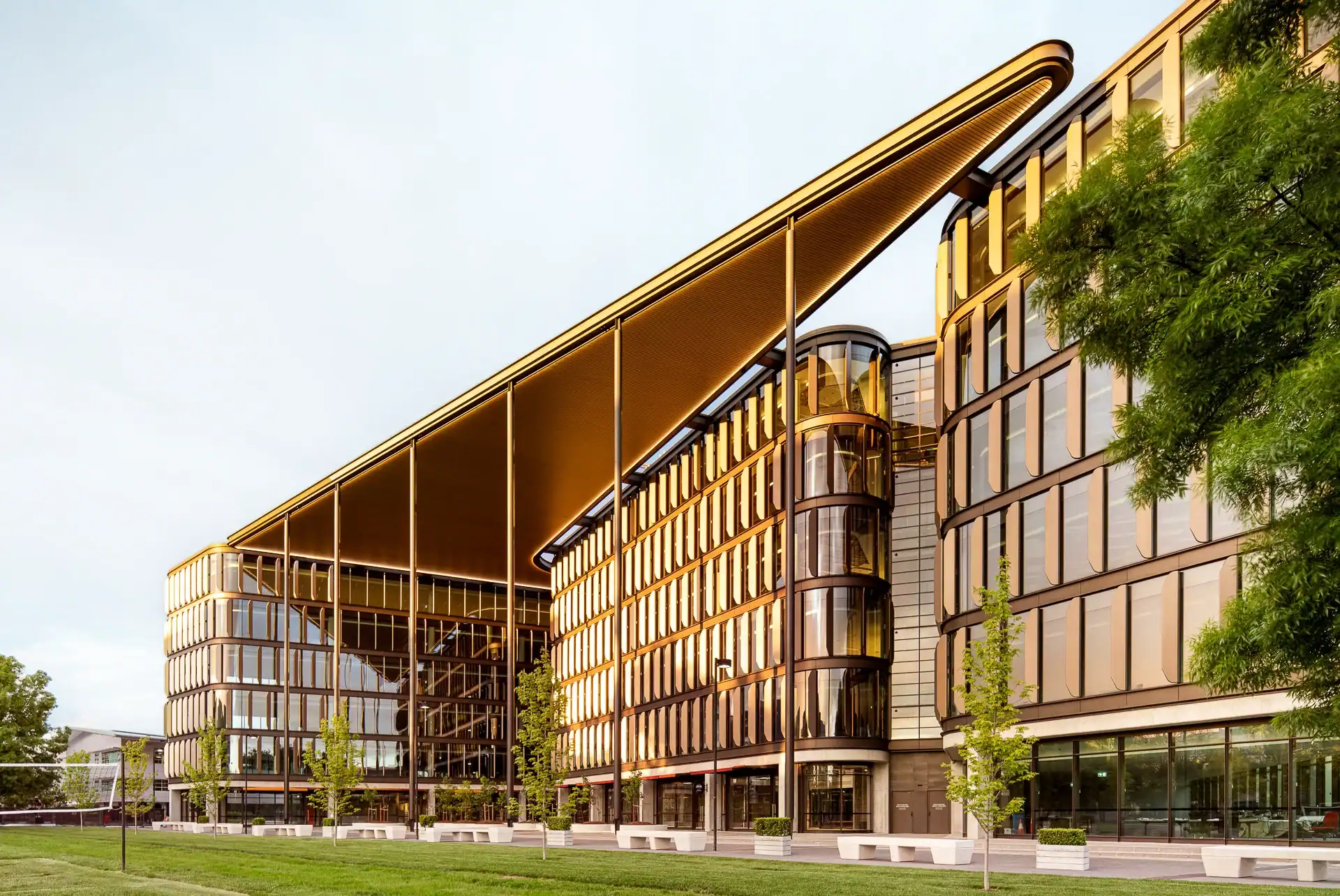
Ready to use 165CW?
Talk to our team about pricing, samples, or technical support.